

Client Experience Consulting
6 months
• starting at $15,000
Every service firm has a version of the same leak. The work is good, the clients are happy enough, and yet renewals are uneven and referrals arrive by accident. Nobody can say exactly where it goes wrong because it does not go wrong anywhere dramatic — it goes wrong in the gaps.
Client experience consulting fixes the gaps. Six months, because changing how a company treats its clients is a management system, and systems do not change in a few weeks.
Client experience consulting fixes the gaps. Six months, because changing how a company treats its clients is a management system, and systems do not change in a few weeks.

You are sitting on a goldmine.
Most owners answer a slowdown by spending more to reach strangers. The growth is already inside the client list — the people who have paid you, liked the work, and would say so if anyone had given them the words and the moment to do it.
How do I get more referrals from existing clients?
Referrals come from clients who can describe what you did and when it happened. Build a deliberate experience — a defined onboarding, visible checkpoints, a written summary at each stage — and clients gain the language to recommend you. Often the issue is simply in make the "how to refer" easier.
How do I improve client retention in a small business?
Retention is not a loyalty problem. It is a visibility problem. Clients leave firms whose value they stopped being able to see, usually around the point where everything is going fine.
The Ideal Client Experience is built on four layers.
Client experience is a management system by which clients are supported through every step of their journey with you. Three things hold that system up. When one of them is missing, the journey breaks in a predictable place.
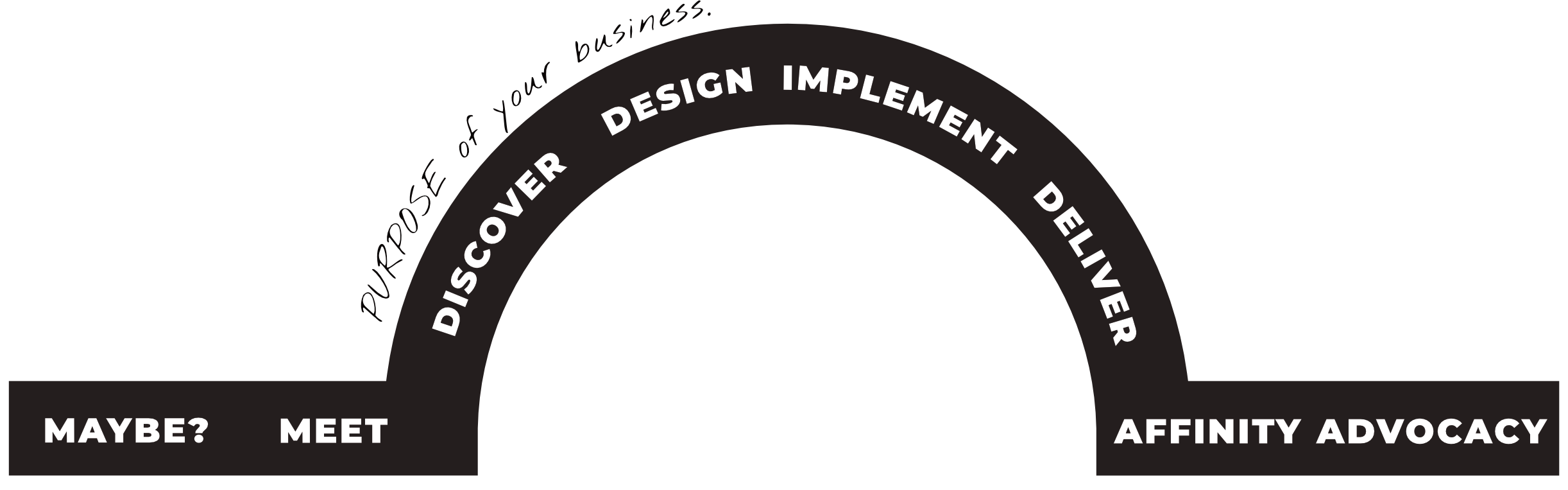
1. Purpose
Why the business exists, and what it is actually for. In the ICX diagram this is the line running underneath the entire journey — every step is standing on it, and when purpose is unclear the steps feel arbitrary to the client and to the team.
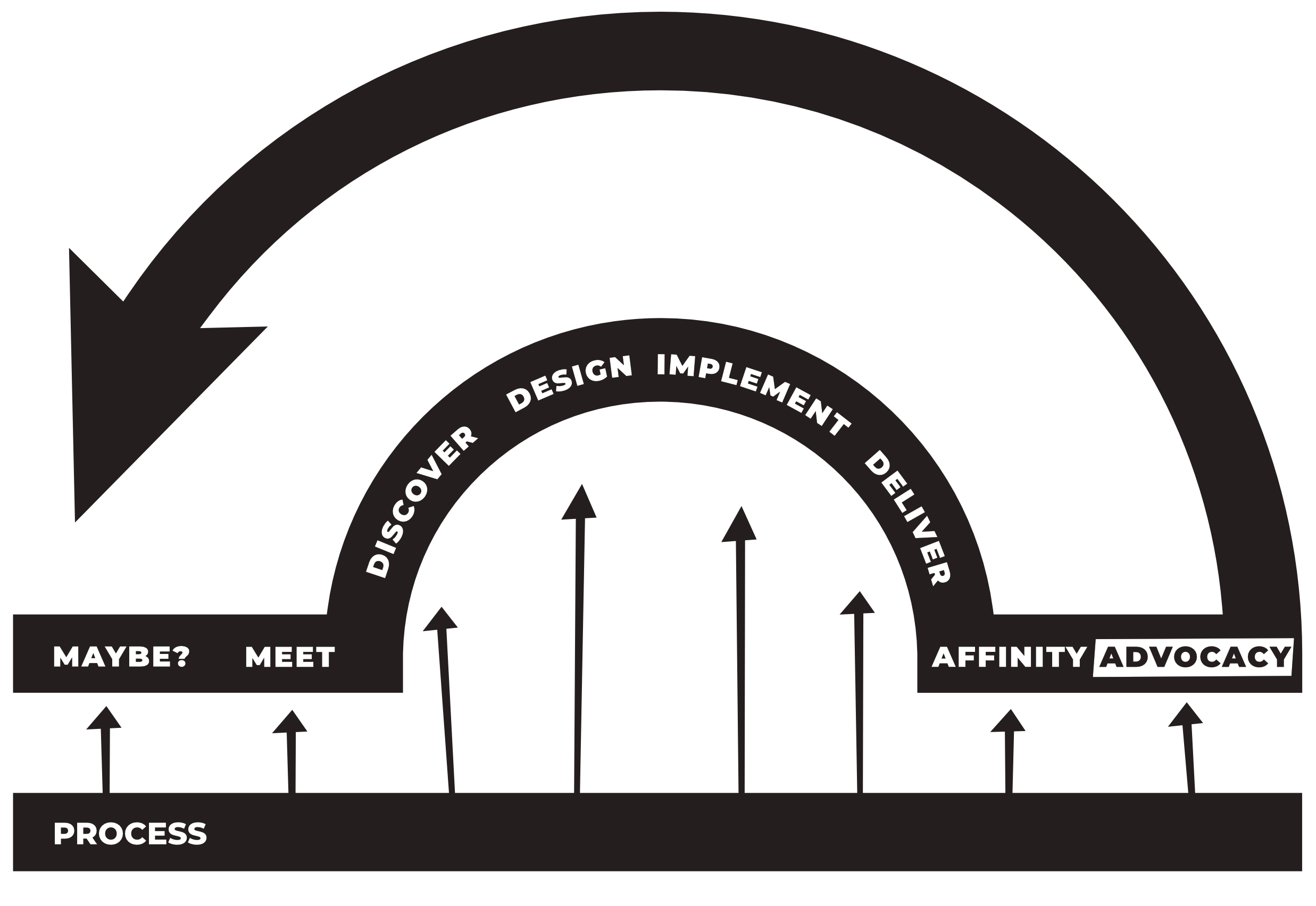
2. Process
The repeatable sequence. What happens at each step regardless of who is on duty that day, whether anyone is busy, and whether the owner is in the building.

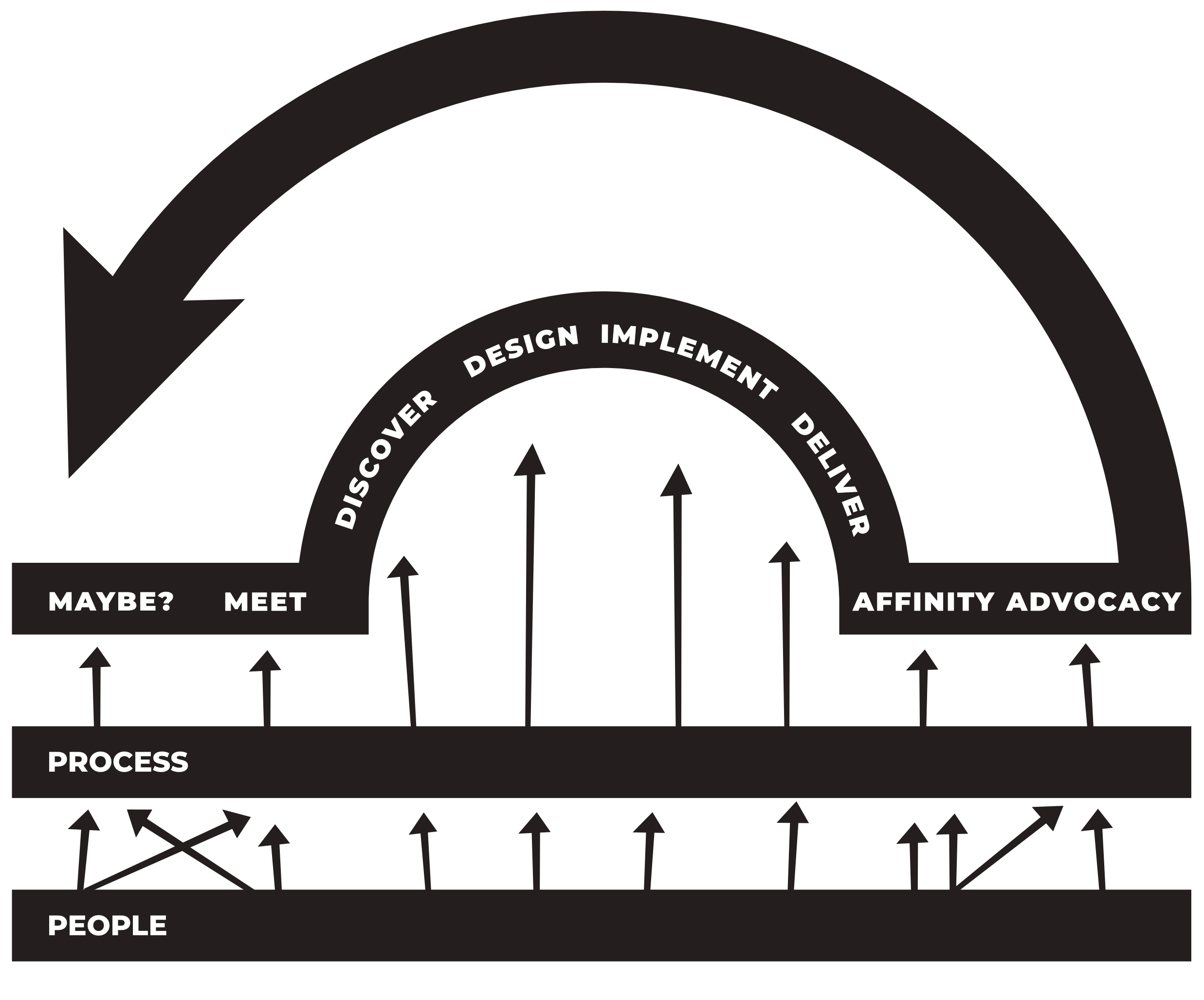
3. People
The team who deliver it. A system nobody owns is a document. People are the treasure, and the experience is only ever as good as the person in front of the client at the time.

The Outcome: Client Advocates
Purpose, process and people, held together over time, produce clients who recommend you without being asked. That is the output of the system, and it is the only growth channel that compounds.
The eight steps of a client journey.
Most businesses have built the middle of this and nothing else. The arc from Discover through Deliver is the sales pipeline you already run. The Ideal Client Experience adds two steps before it and two after it — and those four are where referrals are won, or quietly lost.
Step 1: Maybe?
The moment a future client realizes you might be the answer to their specific problem.
Step 2: Meet
Your first chance to shake hands, virtually or in person.
Step 3: Discover
Where business and client dive in and learn about each other, personally and professionally.
Step 4: Design
A time to share strategic wisdom and give the client the power to choose.
Step 5: Implement
When you follow through on your value proposition and get it done.
Step 6: Deliver
The singular moment of celebrating the completion of your promise.
Step 7: Affinity
Resetting the relationship to create long-term loyalty.
Step 8: Advocacy
The season where clients naturally advocate for you — first to themselves, then to others.
Steps one and two happen before anyone has decided anything. Steps seven and eight happen after the invoice is paid. Both pairs sit outside the pipeline, which is exactly why most firms never built them.
What gets built?
The map.
This is the eight-step model above — your client journey map, set out in full in Never Drop the Ball Again.
The gaps.
Where the experience goes quiet, where something is promised and not confirmed, where the client is doing work you should be doing.
The system.
Defined onboarding, scheduled checkpoints, a written artifact at each one. Small, repeatable, and it survives you being busy.
The training.
Client experience training for the people who actually deliver — because a system nobody owns is a document.
What is client experience design?
Client experience design is the deliberate mapping of every touchpoint a client has with a business, from the first moment they suspect you might help to the moment they recommend you — then building a repeatable system at each one. It is design in the engineering sense rather than the visual one: deciding in advance what happens, rather than finding out afterward.

59%
PwC, Experience
Is Everything, 2018
59% of US consumers will walk away from a company they love after several bad experiences
50%
Frederick Reichheld,
The Loyalty Effect
50% of customers are lost within five years at the average company
8
Book, Never Drop
The Ball Again
There are 8 steps in a client journey, most of which were never deliberately designed to deliver the best client journey.
4
Book, Never Drop
The Ball Again
4 of those 8 steps sit outside the sales pipeline, where they are rarely managed at all.
This engagement is a book.
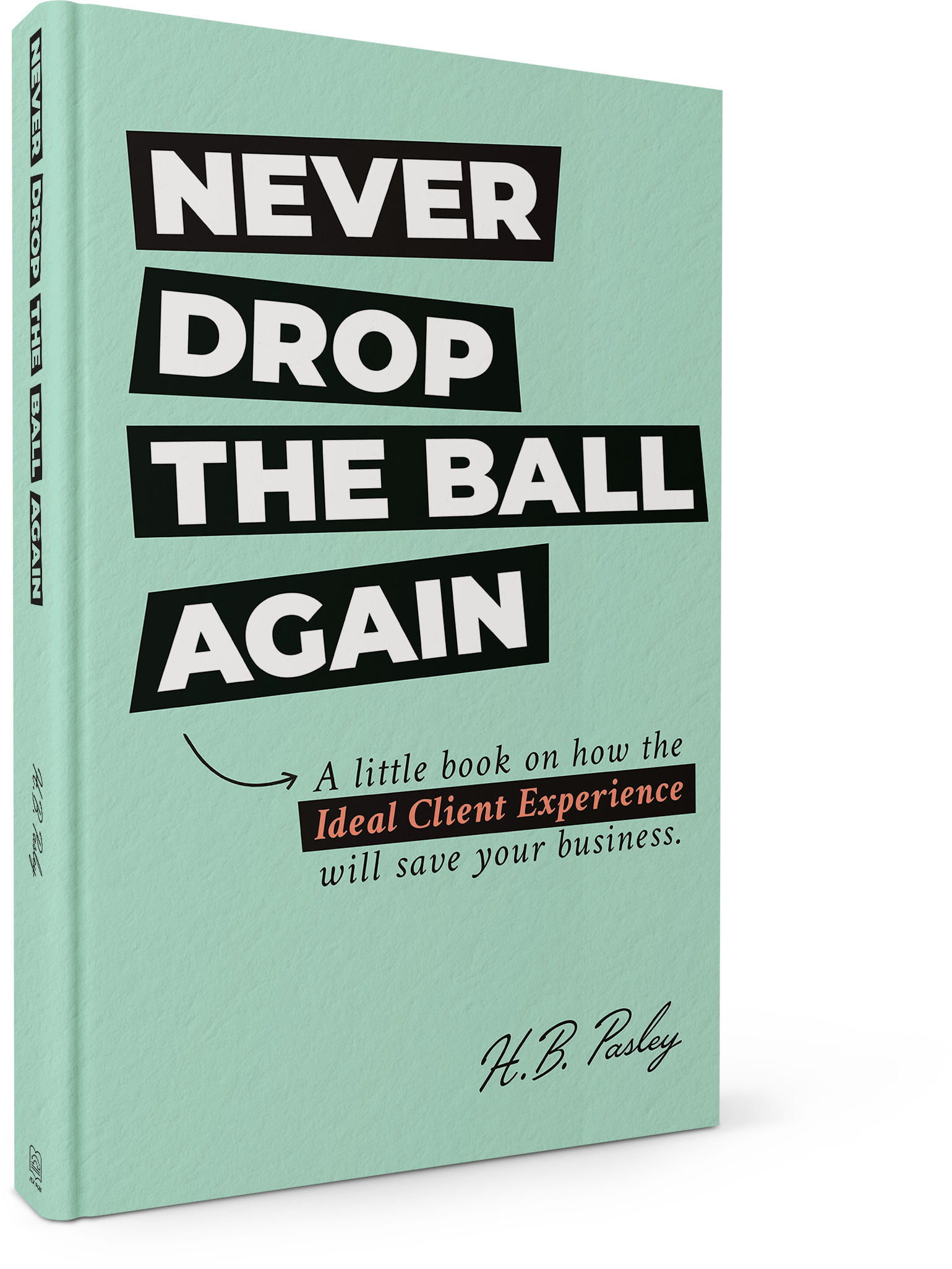
Never Drop The Ball Again was published in October 2022 by ICX Publishing — a short book on how the Ideal Client Experience saves a business. It carries forewords from Chris Lieto, an Ironman world champion and consultant, and Erik Morin, a financial advisor to business owners, a financial advisor to business owners. The eight steps above are from its pages.
That matters here for one reason. When a firm sells client experience work, you are usually buying their opinion about client experience. The method we use was written down, published and put on a shelf before you called — so you can read it first, decide whether you agree, and hold us to it afterward.
The engagement is that book, implemented inside your business and built around the way you actually work.